
Knee Information
SURGICAL PROCEDURES
Total knee replacement using Visionaire
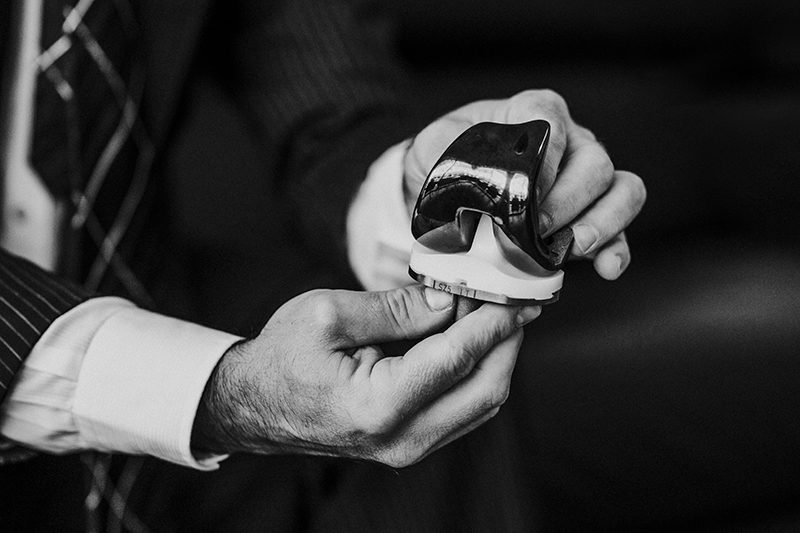
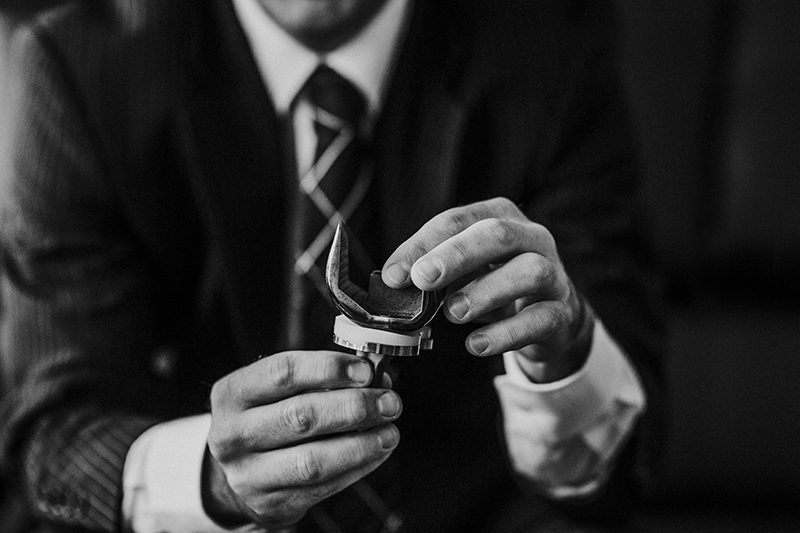
To pre-plan and optimise positioning and sizing of knee replacements Dr Blythe uses the Visionaire Patient-Specific Instrumentation system. This technology uses imaging (X-rays and MRI) to generate a virtual 3D model of the knee. Algorithms, engineers and Dr Blythe decide where the implants should be positioned to optimise alignment and function. A 3D printer then creates bespoke cutting blocks. These are sterilised and packaged to be opened in the operating theatre. These individualised blocks guide Dr Blythe where to make bony cuts which determines where the real prosthesis is positioned.
For more information click here.
ROBOTIC ASSISTED TOTAL KNEE REPLACEMENT
In 2024 Dr Blythe commenced using the CORI robot system to perform Robotic Assisted Total Knee Replacement. The same preoperative planning process is undertaken as for Visionaire. During the operation a virtual 3D model of the knee is created by mapping the joint surfaces. The implant sizes and positions are planned as accurately as possible to restore prearthritic anatomy. Implant orientation is then refined to individualise ligament balance prior to committing to any bone cuts. The CORI robotic hand piece is used to implement the bony cuts to replicate the virtual 3D model. The bone cuts then determine where the real implant is positioned.
FAQ
How long will I be in hospital after a TKR?
Usually two to three nights. If you live alone, have mobility or medical issues or suffer a complication you may require longer. Depending on these factors some patients may require care by a rehabilitation physician before going home.
How long does it take to recover from a TKR?
It is quite normal to have some heat, pain and swelling for the first twelve weeks after a TKR. It will typically take six to twelve months to achieve maximal recovery. One study has shown that on average there is a detectable temperature difference compared to the unoperated knee for 18 months.
How long will I require crutches after a TKR?
Walking aids are for security and are not mandatory. Most patients will use crutches or a walking stick for two to six weeks.
Will I have staples that need to be removed?
No, Dr Blythe only uses dissolvable sutures for TKR. The waterproof dressing needs to be kept intact until the two week post-operative appointment.
How soon after a RIGHT TKR can I drive?
You are able to drive after six weeks providing you feel safe and confident to do so.
How soon after a LEFT TKR can I drive?
If you have an AUTOMATIC vehicle and have had a LEFT TKR you are able to drive after two weeks providing you feel safe and confident to do so.
Does the robot do the surgery?
No, Dr Blythe does the surgery. The current generation of robots used to assist joint replacement as passive as opposed to fully automated. The robot is a tool that facilitates how the bone cuts that have been planned in virtual space are implemented. Dr Blythe holds the burr and the robot permits cutting only in a tightly controlled virtual space.
Is robotic knee replacement a faster operation?
No, at best it is time neutral. The robot allows greater accuracy of positioning the implants.
Does a robotic knee replacement have a smaller incision or scar?
No, the incision is either the same size or slightly longer. Also there will be two small incisions in the mid shin.
I've had a robotic knee and there are two small incisions on my shin. What were these for?
At the time of the operation two pins were inserted through those small incisions so that the robot could identify where in space your tibia (lower leg bone) was. Two pins were also inserted in your femur (thigh bone) but these were positioned in the main incision.
Can I kneel after a total knee replacement?
Yes. Dr Blythe recommends you don't start trying to kneel until the wound has completely healed which is usually around three weeks. He recommends that you start trying to kneel on a cushion or pillow initially around this time. Dr Blythe uses a lateral para-midline (slightly to the outside) incision. While this is not as aesthetically pleasing as an incision straight down the middle it means that the sensation in the skin at the front of the knee is preserved. With the traditional midline incision approximately half of patients will be able to kneel. With the lateral para-midline incision, especially if you try commencing kneeling from around three weeks, there is an 80 - 90% chance of being able to kneel.